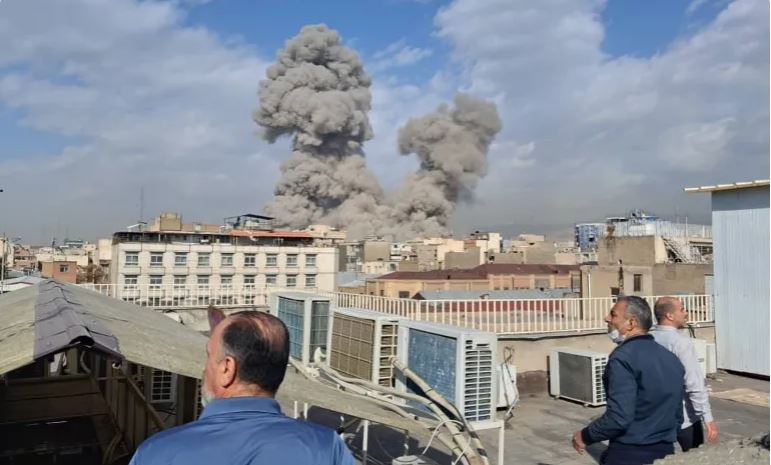
The United States and Israel have launched air and missile strikes on several targets in Iran, including the capital, Tehran. The attacks have increased tensions across the Middle East and raised fears of a wider war.
US President Donald Trump said the strikes were part of “major combat operations.” The attacks happened while the US and Iran were holding talks about Iran’s nuclear and missile programs.
Iran answered the strikes by firing missiles toward northern Israel. Officials have not yet shared clear numbers on deaths or damage in either country.
Why Did the Attacks Happen?
Tensions between the US and Iran had already been rising. President Trump warned Iran several times in recent weeks. He said Iran was not meeting international demands about its weapons programs.
Eight months ago, Iran, Israel, and the US fought a short 12-day conflict. That fighting ended, but mistrust remained. Experts say the latest strikes show that talks failed to calm the situation.
Israel sees Iran as a major security threat. The US says Iran’s missile and nuclear programs worry its allies in the region.
Where Did the Strikes Hit?
Israel first announced the attacks early Saturday. A US official later confirmed the joint operation, according to Al Jazeera.
The US moved many warships and fighter jets into the region before the attack. This was the largest US military buildup there since the Iraq War.
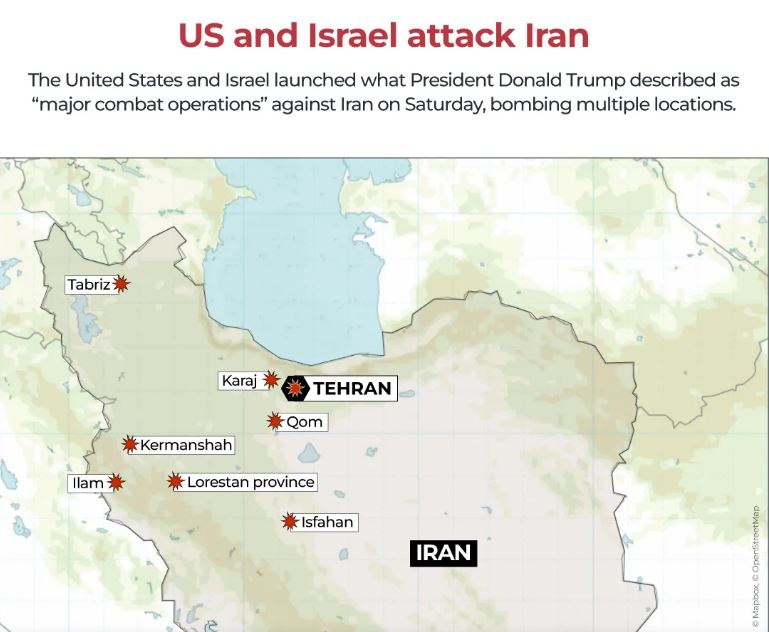
Iran’s Fars news agency said missiles hit areas near University Street and the Jomhouri district in Tehran. These areas are close to the headquarters of the Islamic Revolutionary Guard Corps.
The Associated Press reported that one strike landed near buildings linked to Iran’s Supreme Leader, Ayatollah Ali Khamenei. Tasnim news agency said explosions also happened in the Seyyed Khandan area of northern Tehran.
Other cities also reported blasts. These include Kermanshah, Qom, Tabriz, Isfahan, Ilam, and Karaj. Local media also reported strikes in Lorestan province.
Iran’s Response
Iran fired missiles toward northern Israel after the attacks. This showed that Iran plans to respond with force instead of only words.
So far, officials have shared little information about casualties. Both sides appear to control what they release to the public.
Iran’s leaders strongly condemned the attacks. They called them an act of aggression. They warned that further strikes would lead to stronger retaliation.
Impact on Civilians
People in Tehran reported loud explosions and fear. Emergency teams rushed to the affected areas. Some neighborhoods lost power for a short time.
Hospitals went on alert. Security forces increased patrols near government and military sites.
In Israel, air defense systems activated in the north. Authorities told people to stay near shelters. Sirens sounded in several towns.
Global Reaction
World leaders urged both sides to show restraint, while the United Nations called for calm. Many warned that the conflict could spread to other countries.
The United Nations called for an immediate stop to the fighting. European leaders said the attacks could destroy chances for new nuclear talks.
China and Russia also urged calm. They said diplomacy must replace violence.
What Could Happen Next?
The next steps depend on how Iran and Israel act. If both sides stop, talks may resume. If strikes continue, the conflict could grow.
Experts say the coming days will be critical. A cycle of attacks could push the region into a wider war.
For now, the world watches closely as new information emerges.
Conclusion
The joint US and Israeli strikes on Iran mark a serious rise in tensions. Attacks hit Tehran and several other cities. Iran replied with missile fire toward Israel.
The situation remains unstable. Diplomacy now faces a major test. What happens next will shape the future of the region.
Pingback: When Will World War 3 Begin? Global War Risk Explained